 ScholarVault
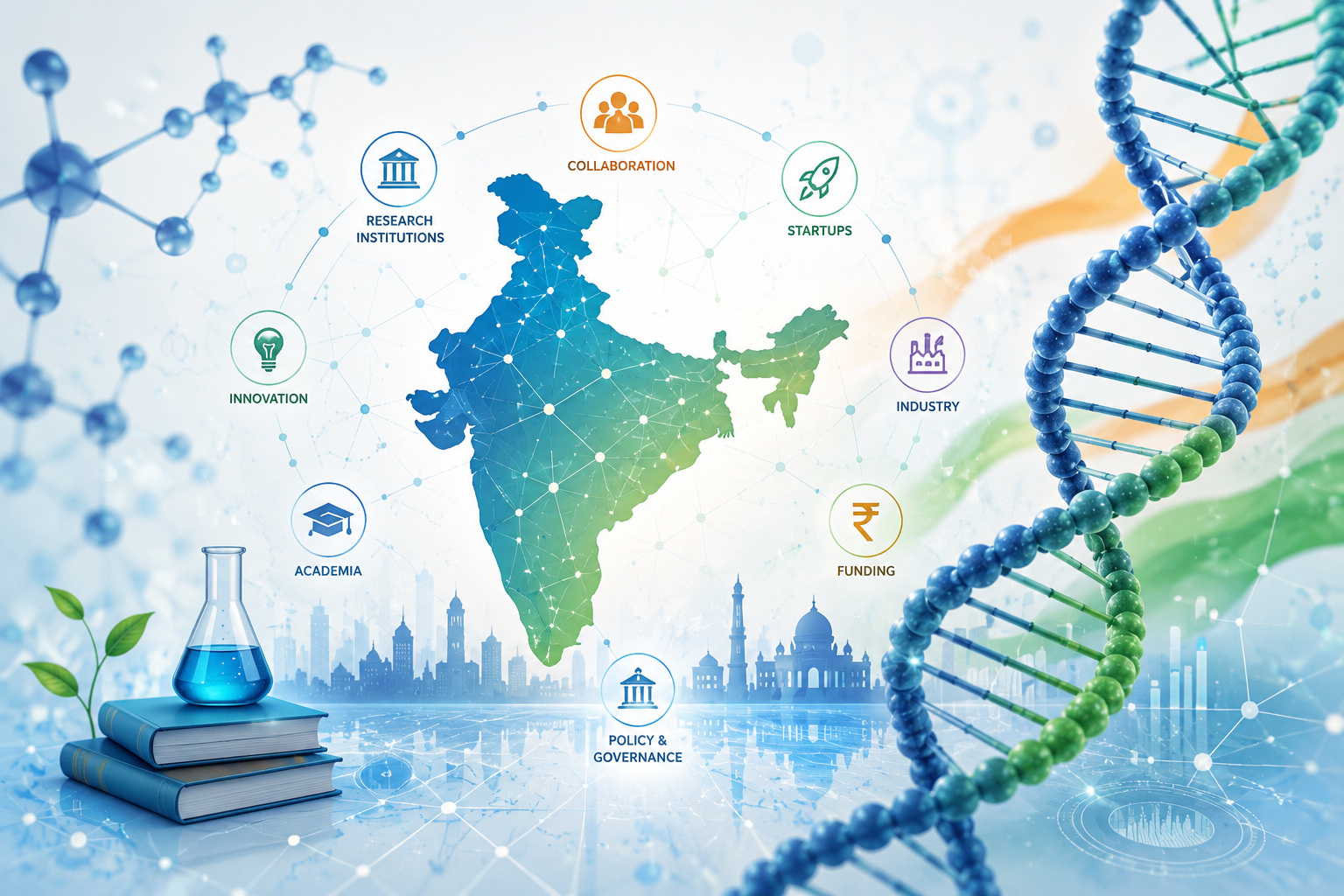
The Ascent of Indian Research: Growth, Challenges & the Road to Global Leadership
How India became the world's third-largest research producer — and what it will take to become a scientific superpower.
Abstract
India's research output has grown nearly sixfold over the past fifteen years, rising from approximately 34,000 articles in 2010 to over 320,000 in 2025. The country now ranks third globally in scientific publications, behind only China and the United States. This article examines the trajectory of India's research community growth, analyzing publication volume, citation impact, R&D investment patterns, institutional infrastructure, and the policy interventions driving this transformation. We find that while India has made remarkable quantitative progress, critical gaps remain in research intensity (GERD at 0.64% of GDP), private sector participation (36% of GERD vs. 75% in peer nations), citation impact (CNCI of 0.89 vs. the world average of 1.0), and the concentration of research output in a small number of elite institutions. The launch of the Anusandhan National Research Foundation (ANRF) in 2023–2024, with a committed budget of ₹50,000 crore, represents a generational opportunity to address these structural deficits. We argue that India's path from high-volume producer to high-impact scientific leader depends on democratizing research capacity, catalyzing private R&D investment, and building durable industry–academia partnerships.
1. Introduction
India stands at an inflection point in its scientific journey. A country that accounted for just 3.1% of global research publications in 2010 now produces over 8.5% of the world's scientific literature, placing it firmly in third position behind China and the United States [2],[7]. This is not merely a statistical milestone. It reflects a fundamental restructuring of India's knowledge economy—driven by expanding institutional capacity, policy reforms, and a growing culture of inquiry across its universities and laboratories.
The growth has been staggering in its scale. India's research output has increased almost sixfold over the last decade and a half, rising from 34,000 articles in 2010 to 195,000 in 2024, making India the second-fastest-growing nation by total article count [1]. In 2024, Indian researchers published more papers than the United Kingdom for the first time in modern history, overtaking several established G20 leaders including Germany [9]. The National Science Foundation's 2023 data confirmed that India and China together drove the majority of global publication growth between 2014 and 2023, with India alone accounting for 13% of all additional publications worldwide [4].
Yet behind these headline numbers lies a more complex story. India's citation impact, while improving, remains below the world average. Its R&D expenditure as a percentage of GDP has stagnated below 1% for decades, even as peers like China and South Korea have surged past 2%. The private sector, which funds 75–77% of R&D in leading scientific nations, contributes only 36% in India. And the country's research output remains heavily concentrated in a handful of elite institutions, with the top 19 institutions accounting for nearly 29% of all publications [18].
This article synthesizes data from the Nature Index, Clarivate's G20 Research and Innovation Scorecard 2025, the Stanford Top 2% Scientists list, the Global Innovation Index, and the Indian government's own R&D statistics to present a comprehensive picture of where Indian research stands today, how it got here, and what the road ahead looks like.
2. Methods
This study is a synthesis and analysis of publicly available bibliometric and R&D investment data from multiple authoritative sources. Publication output and citation impact data were drawn from the Clarivate G20 Research and Innovation Scorecard 2025, the Nature Index 2025 Research Leaders tables, and the National Science Foundation's Science and Engineering Indicators 2025 [2],[3],[4]. Data on individual researcher recognition were sourced from the Stanford Top 2% Scientists list for 2025 [5]. R&D expenditure statistics were obtained from India's Department of Science and Technology R&D Statistics at a Glance 2022–23, the Global Innovation Index reports for 2024 and 2025, and the World Bank's World Development Indicators [10],[20],[19]. Policy and institutional data were gathered from government press releases, the ANRF Act of 2023, and analyses from the Observer Research Foundation and Harvard Kennedy School [11],[18],[16].
The analysis covers the period from 2010 to 2025, with particular emphasis on the most recent five years where data are most complete. All citation impact metrics use the Category Normalized Citation Impact (CNCI) framework, where a value of 1.0 represents the world average. Publication counts use fractional counting unless otherwise noted. Currency figures are presented in Indian rupees (₹) and converted to USD using purchasing power parity (PPP) where comparative analysis requires it.
3. Results
3.1 The Sixfold Expansion of Research Output
India's publication trajectory over the past fifteen years is one of the most dramatic in the history of modern science. From a baseline of approximately 34,000 articles in 2010, output grew to 195,000 by 2024 and reached an estimated 320,000 in 2025 [1],[7]. This represents a nearly sixfold increase and an annual growth rate consistently exceeding 9%, more than double the world average of 4.3% [10].

The most significant inflection point occurred between 2023 and 2025, when annual output jumped from approximately 175,000 to 320,000 papers [7]. This acceleration coincides with the operationalization of the Anusandhan National Research Foundation (ANRF), which began disbursing grants in late 2025. The ANRF's first funding round supported 2,400 projects across 14 thematic areas including artificial intelligence, clean energy, quantum computing, and public health [7].
In the global context, India overtook Japan in 2016 to reach fifth place, surpassed Germany and the United Kingdom in subsequent years, and by 2024 had firmly established itself in third position [2]. For context, China produced approximately 1,003,473 articles and the United States 568,973 in 2023, while India's fractional count stood at roughly 195,000 [4].

3.2 The Quality Gap: Volume Without Commensurate Impact
While India's volume growth is impressive, citation impact tells a more nuanced story. The Category Normalized Citation Impact (CNCI) for Indian research averaged 0.73 in 2015 and improved to 0.89 by 2024—still below the world average of 1.0, but closing the gap steadily [2]. Encouragingly, on internationally co-authored papers, India's CNCI reaches 1.4, well above the world average, suggesting that collaboration significantly enhances research quality [1].
India's presence in the Nature Index, which tracks publications in 145 top-tier natural science and health science journals, has also grown substantially. The country ranked 9th globally in the 2024 Nature Index Research Leaders tables, with a 14.5% increase in adjusted share from 2022 to 2023 [1]. India's overall Nature Index Share rose from 1,036 in 2020 to 1,783 in 2024, with chemistry and physical sciences leading the growth [3].

However, the H-index—a composite measure of productivity and impact—tells a different story. Despite ranking third in total output, India ranks only around 19th globally in H-index, with a score of 925 in 2024 compared to 3,213 for the United States [6]. This 71% gap underscores that India produces more papers but fewer highly cited ones per capita than established research powers.
India published 19,000 articles (11% of its total output) in the top 10% of most-cited papers globally in 2024, ranking third behind China and the United States. However, only 12 Indian journals hold Quartile 1 status in the Scimago database, highlighting a structural weakness in domestic journal infrastructure [6],[9].
3.3 R&D Investment: The Persistent Funding Deficit
Perhaps the most critical constraint on India's research ambitions is its persistently low R&D expenditure. India's Gross Expenditure on R&D (GERD) has remained between 0.6% and 0.7% of GDP for over a decade, standing at 0.64% in 2020–21 [10],[11]. This is dramatically lower than peer nations: China invests 2.4%, the United States 3.5%, South Korea 4.8%, and Israel 5.4% [12].

In absolute terms, India's R&D spending has grown significantly—more than doubling from ₹60,197 crore in 2010–11 to ₹127,381 crore in 2020–21, and reaching an estimated USD 75.7 billion in 2024 [10],[14]. India now ranks among the top 15 global R&D spenders. However, because India's GDP has also grown rapidly, the ratio of R&D to GDP has barely moved. The government's long-standing goal of reaching 2% of GDP has remained unfulfilled for over two decades [2].
The composition of R&D spending reveals a second structural problem. In most advanced research nations, the private sector is the dominant funder of R&D—contributing 75% in the United States and 77% in China. In India, the private sector funds only 36.4% of GERD, with the government carrying the bulk of the burden [13]. India's business enterprise R&D expenditure (BERD) as a percentage of GDP is just 0.2%, compared to 1.3% in China and 2.5% in South Korea [7].
| Country | GERD (% GDP) | Private Share of GERD | Global R&D Rank |
|---|---|---|---|
| United States | 3.5% | 75% | 2 |
| China | 2.4% | 77% | 1 |
| South Korea | 4.8% | 79% | 5 |
| Germany | 3.1% | 68% | 4 |
| India | 0.64% | 36% | ~10 |
3.4 The Research Workforce: Growing, but Thin
India had approximately 262 researchers per million population in 2020, up from 110 in 2000 [10]. While this represents more than a doubling over two decades, it remains far behind advanced economies: South Korea has 8,714 researchers per million, Israel 8,342, and Denmark 7,692 [10]. India's researcher density is roughly 3% of South Korea's, highlighting an enormous gap in human capital deployment.
PhD enrollment in India has grown substantially, increasing by 81.2% from 1.17 lakh in FY15 to 2.13 lakh in FY22 [13]. The number of IITs has grown from 5 to 23, the number of universities from 752 to over 1,200, and seven new Indian Institutes of Science Education and Research (IISERs) have been established [8]. Yet, as DST Secretary Prof. Abhay Karandikar has noted, only 5–10% of India's universities are consistently engaged in high-quality research [15].
3.5 Recognition on the Global Stage: The Stanford Top 2%
One of the most encouraging indicators of India's rising research quality is its growing representation in the Stanford Top 2% Scientists list. In 2025, 6,239 Indian researchers made the list—a 17% increase over 5,352 in 2024 and a global share of 2.6%, up from 2.2% in 2023 [5]. The number of Indian institutions employing top-cited researchers rose to 1,495 in 2025, a 12% increase from 1,384 in 2024, signaling wider institutional participation in quality research [5].

However, India's 2.6% global share in the top-cited elite remains modest compared to the United States (12%) and China (10%). Roughly 91% of India's top-ranking researchers are based in higher educational institutions, with only 9% from government-funded research institutions like CSIR, BARC, and TIFR [5]. Notably, the share of private HEIs in the top-cited list rose from 22% to 30% between 2022 and 2025, partly attributed to the weight given to research publications in the NIRF rankings [5].
3.6 Disciplinary Strengths and Gaps
India's research portfolio is distinctly weighted toward the natural sciences and engineering. Approximately 51.7% of India's papers are in the Natural Sciences and 35.4% in Engineering and Technology, with both fields doubling in output over the past decade [2]. Among top-producing nations, India has the highest concentration of publications in computer and information sciences, at 28% of its total output [4].

In the Nature Index, India performs relatively better in chemistry, ranking 6th globally, while ranking between 8th and 10th in other subjects including biological sciences, physical sciences, earth and environmental sciences, and health sciences [8]. The country's semiconductor research output has grown by 1,665% since 2002, surpassing that of the United States in 2020 [4].
3.7 The Innovation Ecosystem
India ranked 38th among 133 economies in the Global Innovation Index (GII) 2025, up from 81st in 2015—a remarkable 43-position climb over a decade [11]. India ranks 1st among lower-middle-income economies and 1st in Central and Southern Asia. Its strongest performance is in knowledge and technology outputs, which track patents, scientific publications, and high-tech exports [1].
The country now hosts four of the world's top 100 science and technology clusters: Bengaluru, Delhi, Chennai, and Mumbai [1]. Patent filings have surged, with WIPO recording 31.6% growth in Indian patent filings in 2022—the highest in the world. India granted nearly 100,000 patents in FY24, compared to fewer than 25,000 in FY20 [13]. International collaboration has also expanded, with the proportion of India's internationally co-authored publications growing from 23% to 36% over the last decade, with the United States as the leading partner [1].
4. Discussion
4.1 The ANRF: A Generational Inflection Point
The establishment of the Anusandhan National Research Foundation (ANRF) by an Act of Parliament in 2023 represents the most significant structural reform in Indian research funding in decades. With an initial budget of ₹50,000 crore over five years, supplemented by a target of ₹36,000 crore from private sector contributions, the ANRF constitutes a tenfold increase in competitive research funding compared to the agencies it subsumed [7],[16].
The ANRF's design addresses several of India's structural deficits simultaneously. Its mandate requires that at least 30% of grants go to researchers at state universities and emerging institutions, directly tackling the concentration of research funding at elite institutions [7]. The Research, Development and Innovation (RDI) Fund commits ₹1 lakh crore over six years specifically to catalyze private sector R&D, functioning as a fund-of-funds that provides patient capital designed to outlast quarterly business cycles [17].
Programs like Partnerships for Accelerated Innovation and Research (PAIR) and the Mission for Advancement in High-impact Areas (MAHA) are already operational, pairing elite universities with emerging institutions and funding targeted research in electric vehicles and other strategic areas [16]. The ANRF has also launched the Prime Minister Professorship Programme, the PM Early Career Research Grant, and the JC Bose Grant to attract and retain top research talent [18].
4.2 Persistent Structural Challenges
Despite these positive developments, India's research ecosystem faces five interlocking challenges that will determine whether the current momentum translates into sustained scientific leadership.
Funding intensity. India's GERD at 0.64% of GDP is less than one-third of China's and less than one-fifth of South Korea's. Even more concerning, this ratio has not meaningfully changed in over a decade, despite repeated policy commitments to reach 2% [2]. The ANRF's catalytic design—where every rupee of public investment is meant to leverage five to ten rupees of private investment—represents a novel approach, but its success depends on industry actually stepping forward [17].
Private sector engagement. India's private R&D spending at 0.35% of GDP is a fraction of China's 1.3% or South Korea's 2.5% [7]. The lack of synergy between academia and industry represents a significant structural weakness: 91% of top-cited researchers are in educational institutions with negligible private-sector contribution to public research [5]. The Harvard Kennedy School analysis identifies key barriers including ineffective public R&D spending, financing gaps in the innovation lifecycle, inaccessibility of R&D infrastructure, and weak intellectual property protection [16].
Institutional concentration. India's top 19 institutions (18 IITs and IISc Bengaluru) account for 28.7% of publications and 30.8% of citations, while roughly 1,200 other universities produce the remainder [18]. Only 5–10% of universities are consistently engaged in high-quality research [15]. State universities, which educate the majority of India's students, often lack basic laboratory facilities, library subscriptions, and computing resources [7].
Quality versus quantity. The dark side of India's publication boom includes widespread publication in low-impact journals. Between 2020 and 2025, India contributed 1,618,824 papers to Scopus-indexed journals—the highest in the world—but 335 questionable journals were removed by Scopus during the same period to preserve research integrity [6]. India owns only 326 of the 22,931 journals indexed in the Web of Science (1.42%), a striking paradox for the world's third-largest research producer [9].
Brain drain. The outflow of talented researchers to universities and companies in the United States, United Kingdom, and Europe continues, driven by higher salaries, better-equipped laboratories, and more supportive research environments [7]. The ANRF aims to address this through competitive international-standard salaries and returning scientist fellowships, but reversing decades of talent outflow will take time.
4.3 Lessons from China's Trajectory
India's current position is roughly comparable to where China stood in 2011 [2]. However, the trajectories diverge in important ways. China took five years to increase from 100,000 to 200,000 papers per year, while India took seven. China has spent at least 1% of GDP on R&D since 2002 and over 2% since 2013, while India has remained below 1% throughout [2].
China's research expenditure reached an estimated USD 785.9 billion in 2024—an almost twentyfold increase from USD 40.7 billion in 2000. India more than tripled its R&D spending from USD 20.8 billion to USD 75.7 billion over the same period, but the absolute gap remains enormous [14]. The lesson is unambiguous: sustained, scaled investment is the prerequisite for accelerating from high-volume production to high-impact science.
4.4 The Role of Platforms Like ScholarVault
The structural challenges outlined above—quality gaps, institutional concentration, limited journal infrastructure—point to a broader need: accessible, high-quality platforms for research dissemination that go beyond traditional journal publishing. This is where initiatives like ScholarVault become critical. By providing AI-assisted research article creation, professional HTML formatting with scholarly typography, built-in citation management, and reader-facing features like reading progress tracking, social sharing, and print-ready output, ScholarVault aims to democratize the publishing pipeline.
India owns only 1.42% of the world's Web of Science-indexed journals [9]. The gap between India's research output (3rd globally) and its journal infrastructure (1.42% of WoS) is one of the largest unaddressed market gaps in academic publishing. Platforms that combine AI-assisted authoring tools with rigorous editorial standards can help bridge this gap, enabling Indian researchers to publish, share, and gain visibility for their work without depending entirely on foreign journal infrastructure.
5. Conclusion
India's research community has undergone a transformation over the past fifteen years that few would have predicted. From producing 34,000 articles annually to over 320,000, from ranking 9th globally to 3rd, and from 4,650 scientists in the Stanford Top 2% to 6,239, the trajectory is unmistakably upward. The country has climbed 43 positions in the Global Innovation Index, from 81st to 38th, in a single decade [11].
Yet the journey from high-volume producer to high-impact scientific leader remains incomplete. India's citation impact (CNCI 0.89) has not yet reached the world average. Its R&D intensity (0.64% of GDP) is less than one-third of China's. Its private sector funds only 36% of R&D, compared to 75–77% in peer nations. And its research output remains concentrated in a small fraction of its 1,200+ universities.
The Anusandhan National Research Foundation, with its ₹50,000 crore core budget and ₹1 lakh crore RDI Fund, provides the funding and governance framework to address these deficits. But as the ANRF's own leadership has emphasized, a catalyst is not a substitute for industry's own commitment. The foundation can lower the risk of the climb; it cannot make it [17].
India's position as the third-largest research producer in the world is a starting point, not a destination. The talent exists, the funding is growing, and the political will is evident. The challenge now is execution—ensuring that increased spending translates into genuine research excellence, that research translates into real-world impact, and that the benefits of scientific growth extend beyond a handful of elite institutions to the full breadth of India's academic landscape. As the DST Secretary has noted, it is not that talent is missing, but that the ecosystem does not consistently enable high-quality research across institutions [15]. Building that ecosystem is the task of the next decade.
References
- Springer Nature. (2025). Global Research Pulse: India. Retrieved from stories.springernature.com/global-research-pulse-india
- Clarivate. (2025). India's G20 Research Rise: Output, Impact & Collaboration. Retrieved from clarivate.com
- Nature Index. (2025). India Country Output. nature.com/nature-index/country-outputs/India
- National Science Board, NSF. (2025). Publication Output by Geography and Scientific Field. ncses.nsf.gov
- The Hindu. (2025, October 14). How Stanford rankings validate the ascent of Indian scientific influence.
- 360info. (2025, August 1). The dark side of India's research publications boom.
- Daily Tips. (2026, March 27). India's Research Output Hits Record High as ANRF Begins Funding.
- India Dialog. (2025, July 7). State of R&D in India: Nature Index 2025.
- AskBisht. (2026, April 27). India publishes a third of the world's research. So why do we own only 1.42% of WoS journals?
- Department of Science & Technology, Government of India. (2023). R&D Statistics at a Glance 2022–23. dst.gov.in
- Press Information Bureau, Government of India. (2026, February 5). Parliament Question: R&D Expenditure. pib.gov.in
- Times of India. (2024, November 29). India improves its R&D expenditure but lags behind many countries.
- Fortune India. (2024, July 23). Can Budget revive India's dull R&D landscape?
- WIPO. (2025, December 23). End of Year Edition — Despite the Odds, Global R&D Spending Grew Again.
- ET Education. (2026, April 17). ANRF to Expand Research Beyond Top 5–10 Universities.
- Harvard Kennedy School. (n.d.). Building India's Innovation Economy: Catalyzing Private R&D Through the ANRF.
- Indian Express. (2026, July 17). India now has the funds, talent and opening for a research leap.
- ORF Online. (2025, October 17). The Innovation Imperative: ANRF and India's Research Vision.
- WIPO. (2025). Global Innovation Index 2025: India Ranking. wipo.int
- World Bank. (n.d.). World Development Indicators: Research and development expenditure (% of GDP). worldbank.org